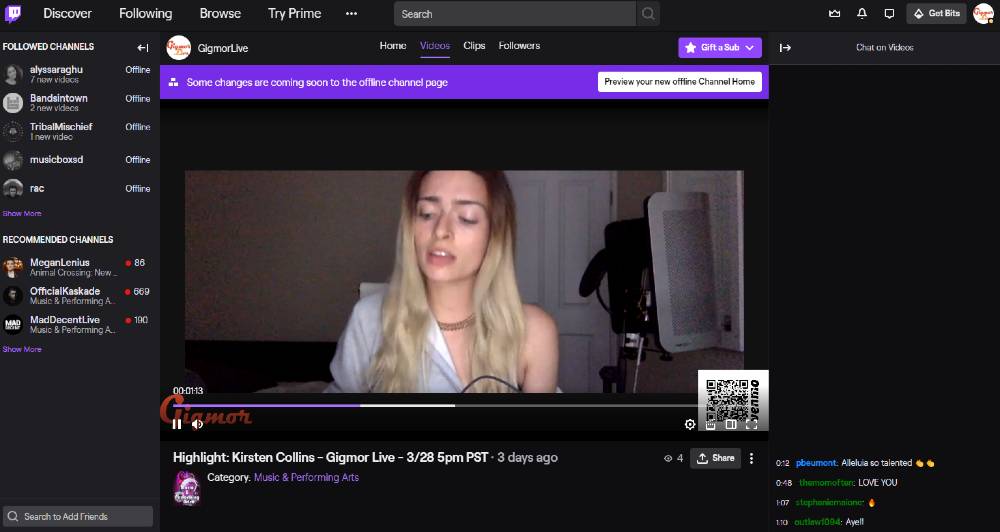
You might ask yourself, “Why should I stream on Twitch? I can already stream on Instagram, Facebook, whatever else, using my phone and it looks good?” The most important answer is that you can actually make money on Twitch. It was designed to allow streamers to make money from their audience through Donations, Subscriptions, etc. Not only that, but the Twitch audience is looking for live content and they want to support streamers.
Live music on Twitch is relatively new and growing everyday. We have our own Twitch channel and you can apply to play one of our streams here. Reading this post will help you prepare for a stream with us and will give you everything you need to start your own channel.
How to start streaming
First thing to do is sign up for a Twitch account on https://www.Twitch.tv. Congrats, you now have a Twitch channel! You do not actually stream directly from your browser into your Twitch channel – you need another piece of software to do that.
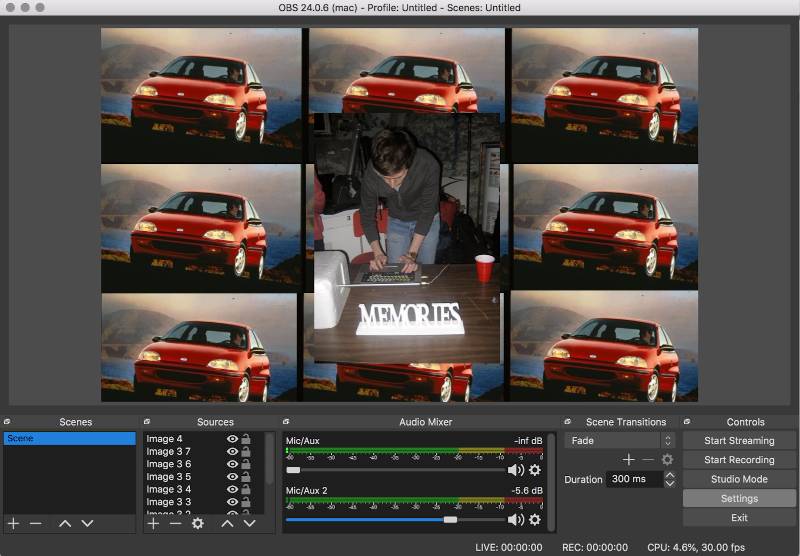
OBS is open source (101% free) and Mac, Windows & Linux compatible. Download OBS from the link above. Here is the OBS dashboard:
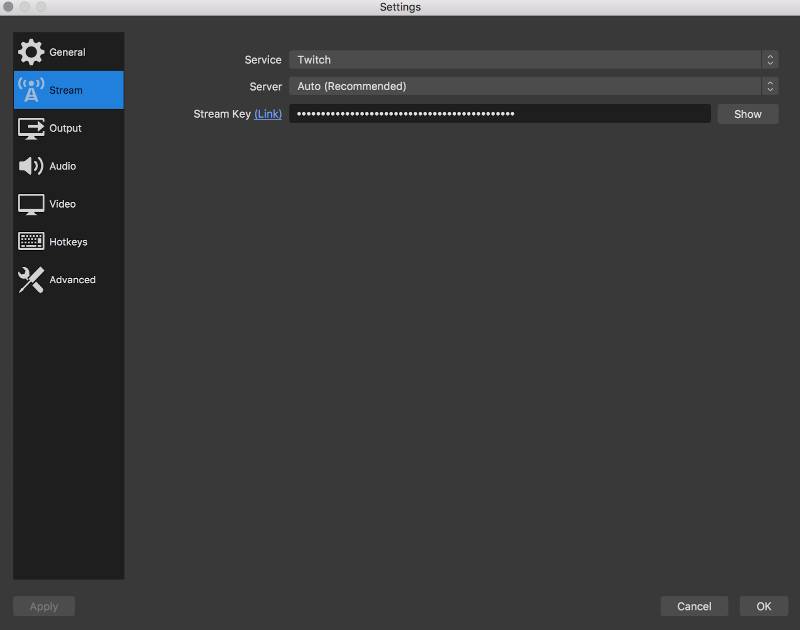
Yours will look different because you won’t have the killer Geo Metro mosaic background but generally the same. Click Settings in the bottom right corner and then click Stream in the vertical menu on the left.
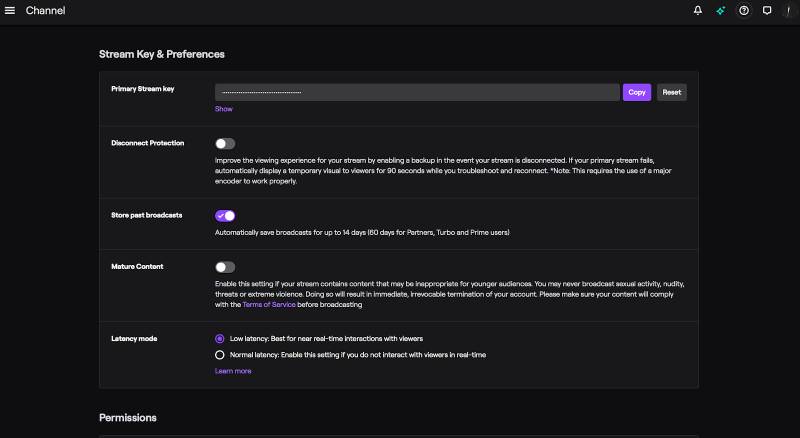
For service, select Twitch, keep Server on Auto and then enter your Twitch Stream Key on the Stream Key line…What is your stream key? The stream key is the private password to broadcast on your Twitch channel. Your Twitch stream key will be located here:
Once you click Start Streaming on the OBS dashboard YOU ARE LIVE. It immediately starts broadcasting.
But what, exactly, is it broadcasting?
To set up your first stream in OBS do this:
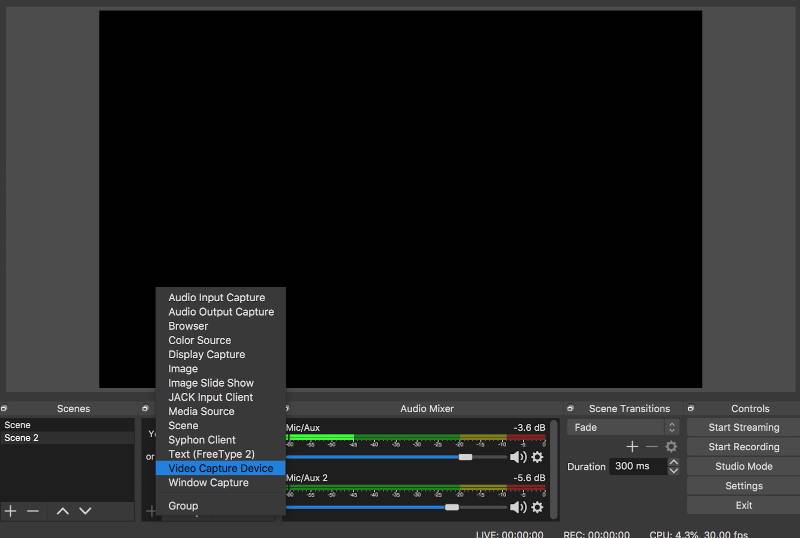
Click the “+” sign in the sources section of your OBS dashboard and select Video Capture Device. Title it “Webcam” or whatever you want and make sure the check box next to Make source visible is checked and then click OK.
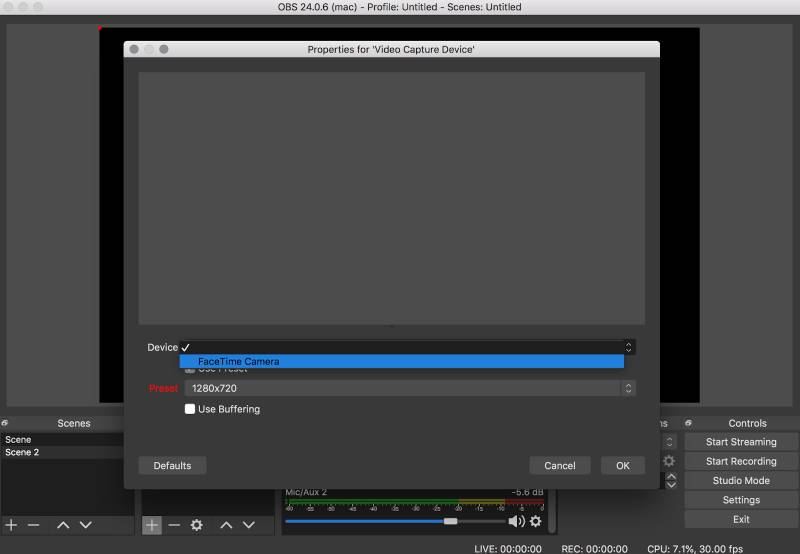
On the next screen, click the drop down menu next to Device and select your camera.
Once you do that and click OK, you should see your camera feed on the OBS dashboard.
OBS should have defaulted to include your built in microphone as the audio source, but in case it did not, follow the same instructions for adding a camera but choose “Audio Input Capture” instead.
Once you have all that set up, you are ready to stream.
If you have other questions about audio/video configuration on OBS, please consult the OBS Wiki here: https://obsproject.com/wiki/
Requirements:
High tolerance for technical frustration (first for a reason)
New-ish computer
Ethernet (recommend 25 mbps download and upload)
Broadcaster software (OBS)
Webcam and Mic
Highly Recommended:
High tolerance for technical frustration (again, first for a reason)
Video rendering beast PC
Gigabit Ethernet
Killer Mic/Camera
If you are on a Mac, depending on your audio setup, you may need to download this program:
iShowU will allow you to pump audio from anywhere on your computer into your stream. For example, if I’m DJing using an app on my computer, I can route the audio from my DJ app through iShowU and ultimately into OBS.
Finally, here are some basic gear recommendations to get started:
Webcams are sold out almost everywhere right now, including Amazon, and used prices on eBay are out of control. Best Buy, Office Depot/Max, Staples and other retailers might have stock.
If you already have a DSLR or similar kind of camera, there are ways to use these cameras as a webcam. It’s probably best to check Google for information on your specific camera but you can check out this guide as well: https://www.video-stitch.com/how-to-use-dslr-as-webcam/
USB mics: Blue Yeti (Any model but Blue Yeti X or standard are preferred), AT2020 usb OR any mics + usb audio interface.
Ethernet is almost essential but if you’re on a newer Apple laptop, you most likely don’t have an ethernet port (or any ports, for that matter). You’ll need a USB to ethernet adapter. Apple’s works well with probably the least set up required but other options are cheaper and most likely perform just fine.
Before you run down this list of helpful resources, I just wanted to extend congrats to Team Gigmor for officially launching their Twitch Channel, Gigmor Live, this weekend!
It was great to be introduced to new talent in such a personal, informal atmosphere. Of course, chances are there will be a lot more of this dynamic especially with the recent announcement of the social distancing protocols extended through (at least) April 30.
How long it will last, the impact it will have on live music again in venues, festivals, concerts, tours, etc. won’t be known until well after the “all clear” is sounded. To help bridge the gap of lost income, this article lists grants, funds, organizations, and resources you may turn to for financial assistance.
Most, if not all, have a short application process, so it may be a good idea to block out a chunk of time to research and apply to appropriate ones. Resources listed below with an asterisk (*) are COVID-19 specific.
A2IM is surveying indie music companies about how the coronavirus pandemic is disrupting their businesses. The results will inform the organization’s discussions with the New York Mayor’s Office of Media and Entertainment, as well as its investigations of federal assistance programs.
The AFM is calling on Congress to provide immediate economic relief on behalf of musicians and other working people in the midst of the crisis, including expanded unemployment benefits and a moratorium on evictions, foreclosures and utility shut-offs. The organization has a resource page providing more information.
Additionally, disabled AFM members can apply for financial aid through its longstanding Petrillo Memorial Fund.
Any AGMA member in good standing is invited to apply for financial assistance under the AGMA Relief Fund, which has temporarily doubled the amount of assistance available to those in need during the coronavirus pandemic.
Anyone pursuing the arts as a career (any discipline, any level of experience) can request financial support from the Artist Relief Project, which will provide applicants on a first-come, first-serve basis with a one-time emergency stipend of $200 and free resources and support to pursue alternative economic opportunities.
Anyone who is an artist can request funds from the Artist Relief Tree, which plans to fulfill every request with a flat $250 on a first-come-first-serve basis. The fund is currently not accepting new requests until it can secure more funding, but if you would like to be informed if and when the opportunity becomes available again, click here.
Performance-rights organization ASCAP has launched a site to help its songwriter, composer and music publisher members stay connected and financially stable during this uncertain time. It includes information on how to receive ASCAP royalties through direct deposit, an online works registration application, access to free mental health services for ASCAP members and more.
Music education hub Audio Assemble has put together a list of online remote opportunities for U.S.-based musicians during the COVID-19 outbreak, including both short-term and long-term job opportunities. It is also raising money for its first live streaming music festival, PLUGGED IN, set for April 8-10. Musicians can apply for paid opportunities to perform during the livestream here.
Backline was established to connect music industry professionals and their families with mental health and wellness providers. In the wake of the coronavirus pandemic, the organization has established a virtual support group that plans to meet regularly via the Zoom app.
Grants and/or brokered assistance for artists that have experienced a recent, career threatening emergency, such as an illness, accident, fire or natural disaster.
A Facebook group meant as an “open forum for constructive debate about the effects of COVID-19 on music production industry professionals,” according to administrators. Its nearly 4,000 members (as of March 18) are sharing news updates, suggested actions, job opportunities and other resources.
This more than $70,000 fund prioritizes LGBTQI+, non-binary, gender fluid and gender non-conforming people of color whose livelihoods have been affected by the coronavirus pandemic. The first round of funding closed on March 17, but organizers say they plan to continue to raise funds through mid-April.
Equal Sound, an organization that strives to break down traditional genre boundaries through events and advocacy, is inviting musicians who have lost income due to the pandemic to apply for funds. Applicants must provide proof they had a confirmed concert cancelled over the coronavirus to receive the money.
In response to the pandemic, Facebook is offering $100 million in cash grants and ad credits for up to 30,000 eligible small businesses around the world, including music and live events businesses. More details to come (you can sign up for updates here).
Facebook also has a new Business Resource Hub to help small businesses prepare for and manage disruptions like COVID-19.
211 offers information about referrals to social services for everyday needs and in times of crisis: Visit http://211.org/services/covid19 or dial 2-1-1.
Individuals working in the gospel music field can submit a request for financial assistance to the Gospel Music Trust Fund, which grants funding in the event “of an emergency or major catastrophe, terminal or severe illness,” according to their website.
Though no emergency special enrollment period has officially been instituted by the federal health insurance exchange due to the coronavirus outbreak, uninsured people are being invited to inquire about their eligibility for a special enrollment in light of the virus.
Non-profit organization Independent Venue Week has compiled a list of indie music venues that have launched GoFundMe and other fundraising campaigns to stay afloat during the nation-wide closures.
Current or former bluegrass music professionals can apply here for financial grants and loans, which are generally between $500 and $5,000. The association has also created a coronavirus-specific resource page.
This fund offers financial support, housing assistance and pro bono medical care for musicians who have made a living playing blues, jazz and roots music.
The “peer-to-peer wealth distribution” service is a tool for salaried workers to donate funds across a database of freelancers, service industry and gig economy workers who are impacted by coronavirus health and safety restrictions.
Artists and bands who have been displaced from touring due to the pandemic can list their merchandise on this site to help offset lost revenue — with zero charges or fees. Apply to be added to the site here.
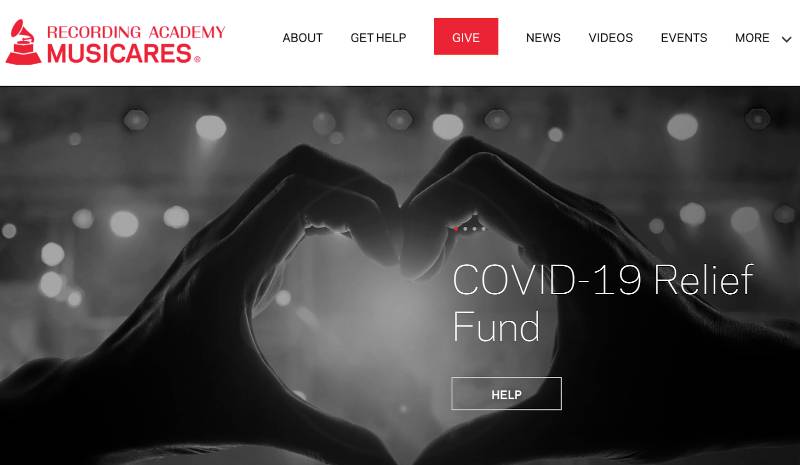
The Recording Academy and its charitable foundation MusiCares have committed $2 million in total to a COVID-19 Relief Fund, established to assist those in the music community who have been affected by the pandemic. People can donate and apply for assistance by navigating to the fund’s official web page.
The New York-based nonprofit established a new emergency grant program in response to the pandemic, offering all eligible applicants up to $200 each. After receiving an “immense volume of applications,” the foundation placed a temporary hold on all applications on March 13. Check this page for updates.
The foundation, which provides ongoing support to American artists 55 and older who live in chronic poverty, also gives out emergency grants to artists in crisis. It is now soliciting donations to ensure the stability of vulnerable elderly musicians during the pandemic.
This artist-led initiative is granting emergency funding to freelance musicians “working in new creative, experimental or improvised music” who have been adversely impacted by the coronavirus crisis. The fund has already raised more than $130,000 and beginning on March 31, eligible artists may apply for grants of up to $500.
Online music course hub Soundfly has put together a free Guide to Learning Things Effectively Online for musicians in quarantine who want to continue learning or practicing skills virtually
In light of the crisis, music finance firm Sound Royalties is allocating $20 million to offer a no-cost royalty advance funding option through April 16. Songwriters, performing artists, producers and other creators with royalty income can apply for cash advances on a one-year repayment schedule, cost-free.
Sweet Relief has established a donor-directed fund to be used specifically for musicians and music industry workers affected by the coronavirus. Funds will go towards medical expenses, lodging, clothing, food and other vital living expenses for those who get sick or lose work due to the pandemic.
Independent musicians are invited to use this more than 21,000-member Facebook support group to connect with music fans. “Use this joint to post links to your merch store, online shows, Patreon, or online music lessons,” organizers write. “If you’ve had a gig cancelled, post the city and your Venmo/PayPal — many of us would love to pass along our ticket refunds to you.”
How cool is that? The silver lining in this crisis is seeing communities come together in so many ways. And this is just a partial of what’s available, so I encourage you to see which resource(s) may fit your needs.
For even more options on a local level, Google “COVID-19 financial assistance in (your city) or (your state)” to see what may be available.
Stay safe, stay healthy, and stay home if at all possible.
————————————————————
Leonard Patterson is an avid fan of all things New Edition, an indie-focused booking agent, a frequent hi-fiver (currently practicing safe “air fives”), and a certified digital marketer. Since stepping off stage as a band manager/front man of a 6-figure party band, he launched Indie Band Coach with a mission to help indie bands reach more fans and book more gigs. When he’s not working, he’s most likely at a live music event, analyzing Marvel movies, or soaking up vitamin D at the beach with his wife and son.
We got 40 musicians together the only way we could — in song! Check out our virtual cover of “Lean On Me”#LeanOnMusic.
If you’ve never heard this quote before, it should certainly resonate with you now…
“The Show Must Go On.”
Whether it’s out of the pure joy of sharing your art or the basic necessity of putting food on the table, thousands of artists are now focusing their attention to livestreaming.
Luckily there are tons of resources available to you as an artist that can help you not only transition, but also start to monetize your livestreams.
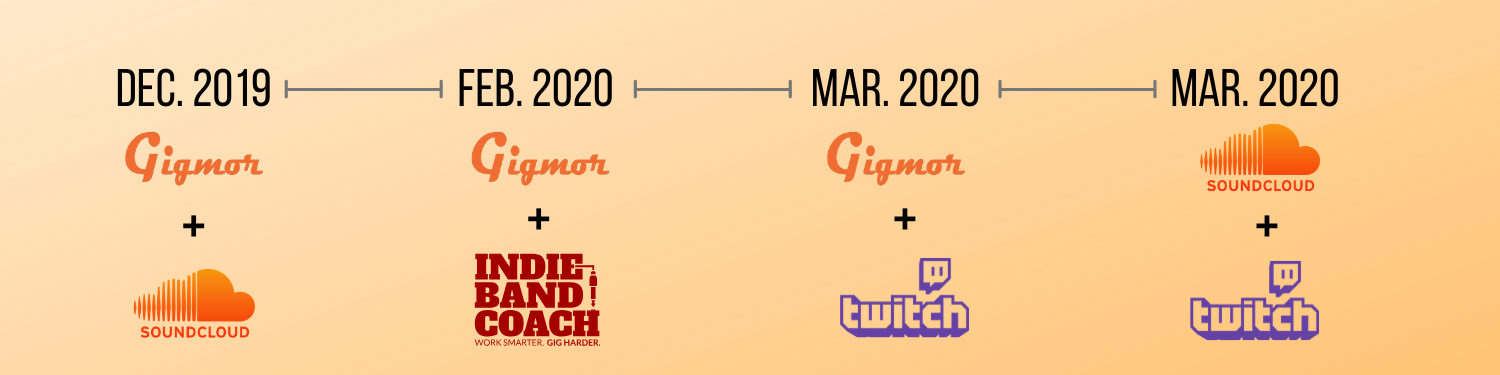
Here is a quick timeline of four such companies and their partnerships and what they all mean for you…
GIGMOR + SOUNDCLOUD
In December, Gigmor announced the launch of their marketing partnership with SoundCloud, the world’s largest streaming site for independent artists. As a special offer, Gigmor offers SoundCloud Pro Unlimited members a 20% discount ($7.99/mo vs. $9.99/mo) to Gigmor’s Pro subscription.
During that time, there was also an awesome live event hosted by Gigmor that took place at the Mint LA, called “Gigmor Presents”. It was a fun showcase of several Gigmor artists, and the thought after that event was to create a recurring live opportunity — more on that below.
GIGMOR + INDIE BAND COACH (that’s me)
When the idea first started for Indie Band Coach, it was literally because (as a booking agent), there were killer, talented, amazing bands being passed up for gigs because their online presence didn’t match their onstage presence.
Since then, I’ve been committed to helping artists succeed online with social media marketing to book more gigs, which includes a LOT of livestreaming and video. In February, I was pleasantly surprised to get an Instagram DM from Tracy Eumont Baird at Gigmor and realized our companies were working towards the same thing.
Since then, it’s been an absolute honor to contribute to the Gigmor blog each week and be involved in some great strategy sessions with Team Gigmor. Of course, none of us could predict a pandemic or the critical impact it would have on the state of live music around the world.
So now more than ever, it’s important to think about staying healthy, staying inside, and staying busy. Of course, things are drastically different, but luckily there are options… and in options, there is hope.
GIGMOR + TWITCH
This week the Gigmor Team announced the launch of their Twitch Channel: Gigmor Live!
So first off, what is Twitch? You may have heard of it if you have any friends who are online gamers, or maybe you’re one of the up & coming musicians already on the platform. Regardless, it’s a great opportunity is what it is!
Twitch is the world’s leading live streaming platform for gamers and almost literally all the things we love. At any given time of day, you can watch and chat with millions of other fans from around the world.
GIGMOR LIVE will be a channel that allows Gigmor to live stream amazing performances from incredible musicians across all genres and locations!
Note: no payment is required to take advantage of this awesome opportunity. Use promo code gigmortwitch to apply if you’re not a Gigmor Pro Member!
As if all of those things weren’t cool enough, there’s still one other thing to highlight — and that’s the monetization possibilities with Twitch.
People can make donations and give you tips on the platform, but the real benefit comes from subscriptions. As a streamer, people can subscribe to your channel, but only once you reach affiliate level. To reach that, you have to meet certain criteria like number of hours, concurrent viewers, and a minimum number of followers.
In speaking with Twitch for Musicians Author, Karen Hall, she mentioned that some artists reach affiliate status in 2 week, some 2 months or maybe longer. And that brings us to our final partnership…
SOUNDCLOUD + TWITCH
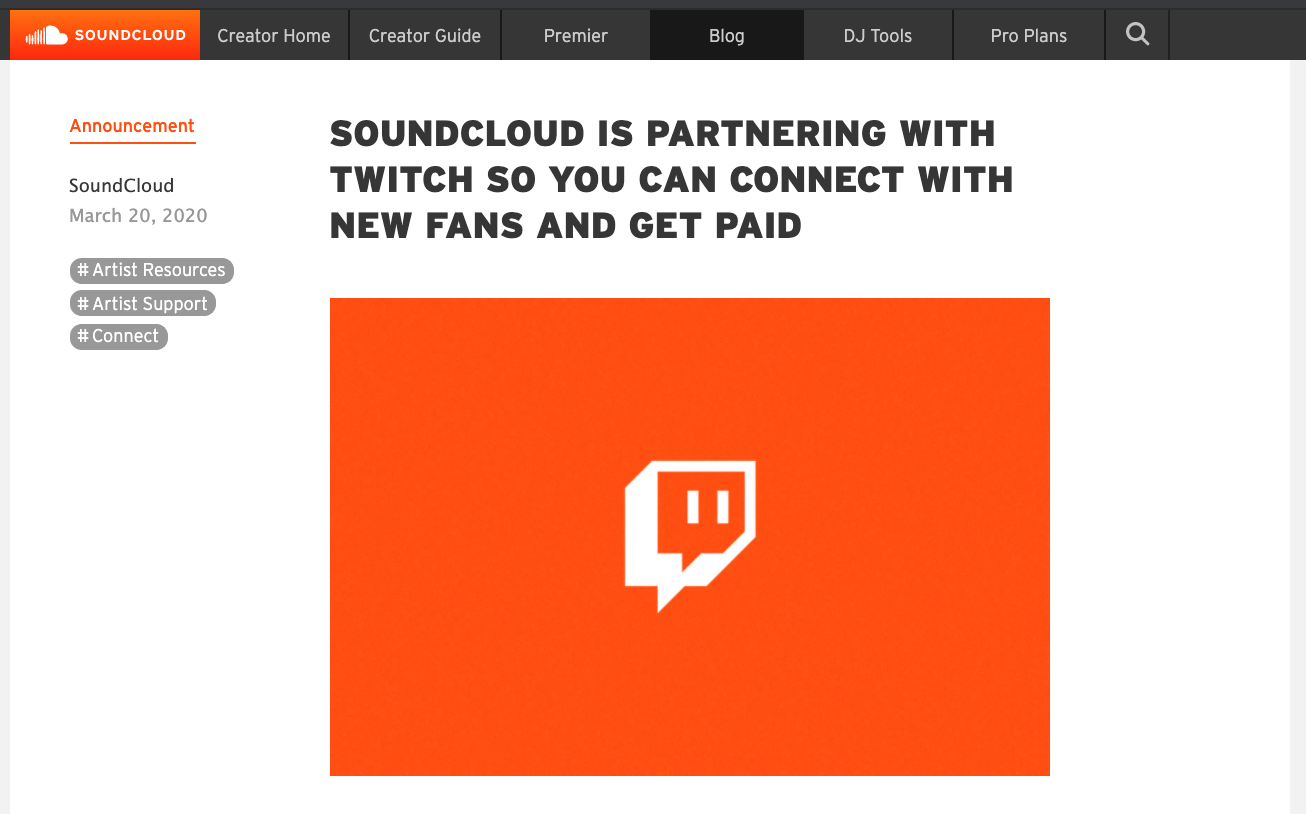
In a very exciting announcement just last week (3/20/20) Soundcloud announced their partnership with Twitch.
“It’s an unsettling time for everyone right now, and we know COVID-19 has been especially hard on musicians who were scheduled to play live shows over the next few months. Many creators are turning to live video streaming platforms to connect with their fans.”
If you are a Soundcloud Pro Unlimited Member, once you join Twitch, you’ll automatically be considered “affiliate status.”
That means — no follower minimum, no concurrent viewer requirements, or number of hours streamed. Your fans will immediately be able to subscribe to your channel.
It’s time to jump on it.
We’re all in this together — separately — but still together. it’s going to take new ideas, new solutions, and new ways of sharing your gifts with your fans to make it through this crisis and we plan to be there every step of the way.
So, sign up for Gigmor.
Apply to be an artist on the Gigmor Live Twitch Channel.
Use the promo code gigmortwitch to avoid the application fee.
Sign up or upgrade your Soundcloud (currently 50% off for $6/mo) to be immediately considered for affiliate status on Twitch.
TWITCH FOR MUSICIANS INTERVIEW
Lastly, speaking of Twitch, if you want to get more familiar with the platform, watch my interview below with Karen Allen, Twitch for Musicians.
If you’re interested in downloading her ebook, Twitch for Musicians, A Step-By-Step Guide to Producing A Livestream, Growing An Audience and Making Money, use our Indie Band Coach promo code IBC20 for a 20% discount.
If you’re interested in signing up for her course (an over the shoulder video course on launching your own channel), click here for a 20% discount as well.
Cheers to your success!
—————————
Leonard Patterson is an avid fan of all things New Edition, an indie-focused booking agent, a frequent hi-fiver (currently practicing safe “air fives”), and a certified digital marketer. Since stepping off stage as a band manager/front man of a 6-figure party band, he launched Indie Band Coach with a mission to help indie bands reach more fans and book more gigs. When he’s not working, he’s most likely at a live music event, analyzing Marvel movies, or soaking up vitamin D at the beach with his wife and son.
Want more fanbase and social media tips? Subscribe to the Indie Band Coach YouTube Channel .